
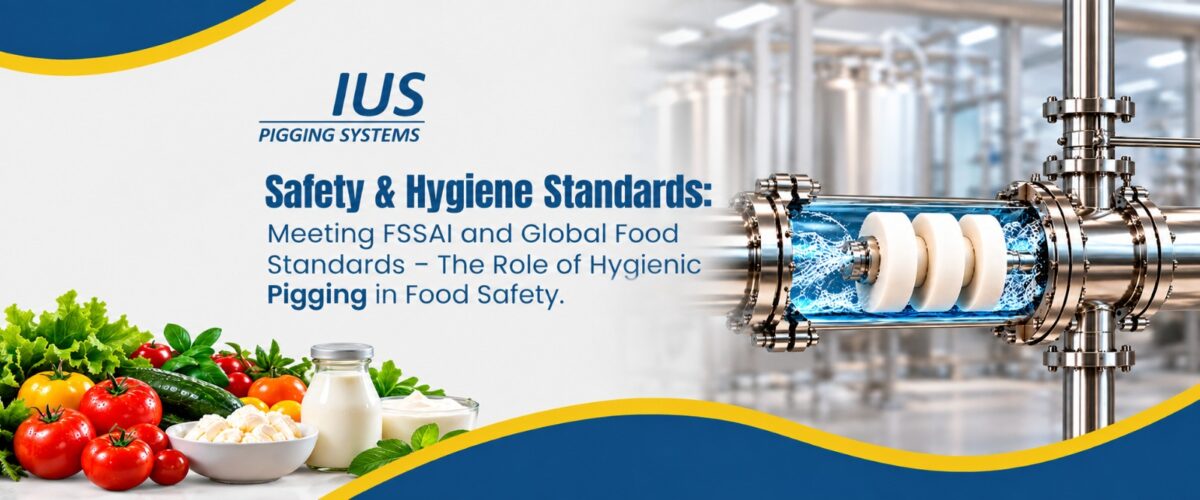
Safety & Hygiene Standards: Meeting FSSAI and Global Food Standards – The Role of Hygienic Pigging in Food Safety
Food safety is a critical priority for manufacturers across the food and beverage industry. From dairy products and sauces to chocolate, beverages, and other liquid food products, maintaining strict hygiene standards is essential to protect consumers and ensure product quality. Regulatory frameworks such as the Food Safety and Standards Authority of India (FSSAI) and international food safety standards require manufacturers to follow appropriate practices for hygienic processing, contamination prevention, and equipment sanitation.
One technology that supports these objectives is the hygienic pigging system. Designed to recover residual product from pipelines while supporting hygienic processing, this technology helps food manufacturers minimize product wastage, reduce cross-contamination risks, and improve cleaning efficiency. With solutions from IUS Pigging, manufacturers can strengthen their production processes while maintaining high standards of food safety and operational efficiency.
Understanding FSSAI and Global Food Safety Standards
FSSAI establishes food safety requirements in India, covering areas such as manufacturing hygiene, sanitation, food handling, and contamination control. Food businesses must follow applicable regulations to ensure that their products are safe for consumption.
For manufacturers, meeting these requirements involves more than maintaining clean production areas. Processing equipment, storage tanks, transfer pipelines, and product-contact surfaces must also be designed and maintained to support hygienic operations.
Traditional pipeline systems can retain product residues after transfer operations. These leftover materials may create cleaning challenges, contribute to product losses, and increase the risk of contamination if cleaning procedures are inadequate. Implementing suitable hygienic processing technologies can help address these concerns.
What Is a Hygienic Pigging System?
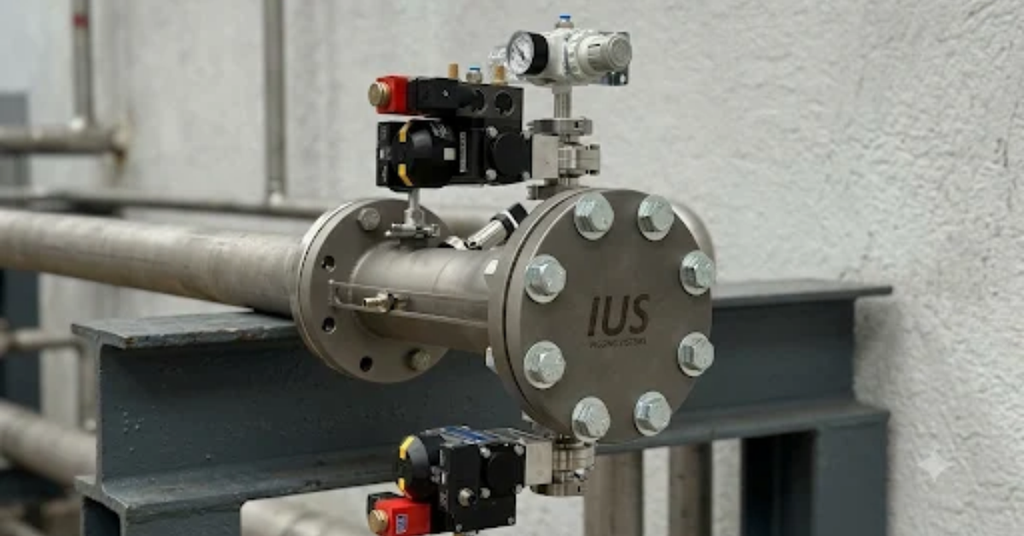
A hygienic pigging system is a specialised pipeline technology used to recover residual liquids, semi-liquids, and other compatible products from processing lines. It uses a specially designed device known as a pig, which travels through a pipeline to push the remaining product towards its intended destination.
In food manufacturing, hygienic pigging is particularly useful for transferring products such as yoghurt, sauces, syrups, chocolate, creams, and other viscous materials, depending on the system’s design and product compatibility.
Unlike conventional product recovery methods, pigging helps remove residual product from the pipeline without requiring the entire remaining volume to be flushed away during every changeover. This reduces product wastage while supporting more efficient cleaning procedures.
IUS Pigging provides pigging solutions designed for industrial applications, including food processing environments where product recovery, operational efficiency, and hygienic handling are important considerations.
How Hygienic Pigging Supports Food Safety
1. Reduces Cross-Contamination Risks
Cross-contamination is a significant concern in food processing, particularly when manufacturers handle different products or ingredients using shared pipelines. Residual materials left inside pipelines normally get mixed with subsequent batches if they are not adequately removed.
A hygienic pigging system helps remove leftover product before cleaning or transferring another product. This reduces the amount of residue remaining inside the pipeline and supports effective changeover procedures.
However, pigging should complement validated cleaning and sanitation processes rather than replace them. Appropriate cleaning procedures remain essential for controlling microbiological, allergen, and other contamination risks.
2. Supports Effective Cleaning and Sanitation
Cleaning pipelines can be challenging, especially when processing sticky, viscous, or high-value food products. Conventional cleaning methods may require substantial water, cleaning agents, and production downtime.
Hygienic pigging removes much of the residual product before the cleaning cycle begins. This can make subsequent cleaning more efficient by reducing the amount of material that needs to be removed.
When integrated with a suitable Clean-in-Place (CIP) process, pigging can support consistent sanitation practices. The effectiveness of the overall process depends on equipment design, cleaning parameters, product characteristics, and appropriate validation.
3. Helps Maintain Product Quality
Product residues left inside pipelines can affect the quality of subsequent batches, particularly when ingredients, flavours, colours, or formulations change.
A hygienic pigging system helps minimise product carryover by recovering residual material from the pipeline. This is especially beneficial for manufacturers handling multiple product varieties on the same production line.
By reducing unwanted product mixing, manufacturers can maintain better control over product consistency and quality.
4. Minimises Product Waste
Food safety and sustainability are closely connected to efficient manufacturing practices. Product discarded during pipeline transfers increases waste and can create additional cleaning requirements.
Pigging technology recovers products that would otherwise remain inside the pipeline or be flushed out during cleaning. This is particularly valuable when processing expensive ingredients like chocolate, dairy products, sauces, and other high-value materials.
IUS Pigging helps manufacturers explore product recovery solutions that can improve material utilisation while supporting hygienic production operations.
Meeting Global Standards Through Hygienic Equipment Design
Food manufacturers must ensure that processing equipment is suitable for its intended application. Hygienic design considerations include appropriate product-contact materials, cleanable surfaces, suitable seals, and pipeline configurations that minimise areas where residues can accumulate.
A hygienic pigging system should be selected according to the product being processed, operating conditions, cleaning requirements, and applicable regulatory expectations.
Manufacturers should also evaluate whether the system supports their HACCP-based food safety procedures and documented sanitation protocols. Compliance with FSSAI requirements or international standards depends on the complete manufacturing process, not simply the installation of a particular technology.
Working with an experienced provider such as IUS Pigging can help businesses identify appropriate pigging solutions for their production requirements.
Conclusion
Maintaining food safety requires a comprehensive approach that combines regulatory compliance, hygienic equipment design, effective cleaning, and controlled manufacturing processes. A hygienic pigging system can contribute significantly to these objectives by reducing product residues, supporting cleaning efficiency, minimising cross-contamination risks, and improving product recovery.
For food and beverage manufacturers seeking to strengthen their pipeline operations, IUS Pigging offers solutions that support efficient product transfer and recovery. When integrated with appropriate sanitation procedures and food safety management systems, hygienic pigging can help businesses improve operational performance while maintaining the high hygiene standards expected in today’s food industry.