
How Hygienic Pigging Systems Improve Product Recovery and Reduce Waste
Efficiency and sustainability are now top goals in contemporary industrial sectors like food, beverage, cosmetics, and medicines. Businesses are always searching for methods to lower product loss, increase operational effectiveness, and uphold strict hygienic requirements. Hygienic Pigging Systems are among the best technologies that manufacturers can use to accomplish these objectives.
These systems are made especially to recover leftover materials from pipelines following manufacturing. Manufacturers can recover valuable products that would otherwise remain stuck inside pipes and eventually be wasted by pushing a specially made “pig” through the pipeline. This helps businesses keep stringent hygienic requirements while also increasing product productivity.
What Are Hygienic Pigging Systems?
Pipeline recovery systems called hygienic pigging systems are made for sectors where product purity and cleanliness are crucial. The method pushes out the leftover product by means of a flexible cleaning and recovery device called a “pig” that moves through the inside of the manufacturing pipeline.
Large volumes of liquid or semi-liquid goods are often left inside the pipeline following production batches. These residues are frequently flushed off during cleaning in the absence of a recovery mechanism, leading to product wastage.
Hygienic pigging systems solve this issue by recovering most of the leftover product before cleaning begins. The recovered product can then be reused, packaged, or processed further, increasing overall efficiency.
The Problem of Product Loss in Processing Industries
Product loss is a major challenge for manufacturers. Pipelines that transport liquids such as sauces, beverages, dairy products, cosmetics, or pharmaceutical liquids often retain a significant amount of product after production.
Some common causes of product loss include:
- Product residue inside long pipelines
- Inefficient pipeline cleaning methods
- Batch changeovers in manufacturing lines
- High-viscosity products that stick to the inside of pipe walls
Over time, this loss can accumulate and result in substantial financial impact. In addition to the financial cost, wasted products also increase environmental impact due to additional water usage, cleaning chemicals, and disposal requirements.
How Hygienic Pigging Systems Improve Product Recovery
One of the biggest advantages of the Hygienic Pigging System is its ability to recover a large percentage of the product left inside pipelines.
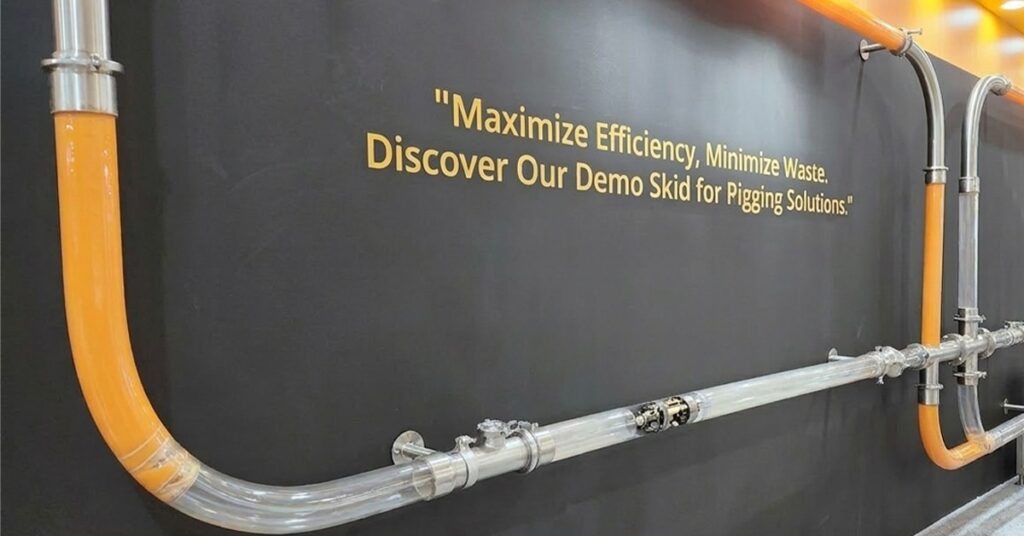
When the pig moves through the pipeline, it creates a tight seal against the pipe walls and pushes the remaining product forward. This process ensures that most of the product is recovered before the cleaning cycle begins.
This method offers several important benefits:
1. Maximum Product Yield
Up to 99% of the product that is still in pipelines can be recovered by manufacturers. This guarantees that important ingredients are not wasted and greatly increases product production.
This recovery might result in significant cost savings for sectors that deal with costly materials or formulations.
2. Reduced Raw Material Waste
Less raw material is wasted when surplus product is recovered. Manufacturers can gather and repurpose goods instead of losing it during cleaning processes.
This lowers production costs and enhances sustainability for businesses.
3. Faster Production Changeovers
Production lines often need to switch between different products or flavors. Traditional cleaning methods take longer because the entire pipeline must be flushed.
Pigging systems speed up the changeover process by removing the majority of the product quickly, allowing cleaning to begin sooner. This increases production uptime and improves operational efficiency.
Waste Reduction Through Hygienic Pigging Technology
The ability of hygienic pigging systems to reduce industrial waste is another important benefit. Manufacturers greatly minimize the quantity of material that goes down the drain by recovering product prior to cleaning.
Numerous operational and environmental advantages result from this.
1. Lower Water Consumption
Cleaning pipelines without pigging systems requires large amounts of water to flush out remaining product. With pigging technology, most of the product is removed before cleaning, thereby reducing water usage.
2. Reduced Cleaning Chemicals
Pipelines require fewer cleaning chemicals because they contain less residual product. This reduces the impact on the environment and operational expenses.
Maintaining High Hygiene Standards
Industries like food processing, pharmaceuticals, and cosmetics must follow strict hygiene regulations. Hygienic pigging systems are specifically designed with sanitary components and materials that meet industry standards.
These systems are compatible with Clean-in-Place (CIP) processes and can be integrated seamlessly into existing production lines. Their hygienic design ensures that product contamination risks remain minimal while maintaining high levels of cleanliness.
Applications Across Multiple Industries
Hygienic pigging systems are widely used across various industries where product recovery and sanitation are essential.
Common applications include:
- Food processing (sauces, syrups, chocolate)
- Beverage manufacturing
- Dairy production
- Pharmaceutical manufacturing
- Cosmetic and personal care products
In each of these sectors, the ability to recover products efficiently while maintaining strict hygiene standards makes pigging technology highly valuable.
Conclusion
Efficiency, sustainability, and hygiene are crucial factors in modern manufacturing. Hygienic Pigging Systems provide an innovative solution that helps industries recover valuable products, reduce waste, and improve operational efficiency.
By minimizing product loss in pipelines, manufacturers can significantly increase yield, lower production costs, and reduce environmental impact. Additionally, these systems support faster changeovers, reduced water consumption, and improved hygiene standards.
As industries continue to focus on sustainable and cost-effective production methods, hygienic pigging technology is becoming an essential tool for manufacturers looking to optimize their processes and reduce waste.