
Increasing Demand for Product Recovery to Reduce Waste and Improve Sustainability
Manufacturing industries are increasingly focusing on reducing product waste, improving operational efficiency, and adopting more sustainable production practices.
As businesses face growing pressure to optimize resources and minimize their environmental impact, product recovery has become an important part of modern industrial operations.
One technology gaining attention in this area is pigging systems. By recovering residual products from pipelines before cleaning or switching to another product, pigging systems help manufacturers reduce product losses, improve resource utilization, and support more sustainable manufacturing processes.
Why Is Product Recovery Becoming More Important?
In industries such as food and beverages, chemicals, paints, cosmetics, and personal care, valuable products often remain inside pipelines after production or transfer operations.
Without an effective recovery method, these residual materials may be flushed out during cleaning processes, resulting in unnecessary product wastage.
This creates several operational challenges:
- Increased raw material and product losses.
- Higher water and cleaning chemical consumption.
- Longer cleaning and product changeover times.
- Increased wastewater generation.
- Higher production and operating costs.
As manufacturers look for ways to improve efficiency while meeting sustainability goals, effective product recovery solutions are becoming increasingly important.
How Does Pigging Help Reduce Product Waste?
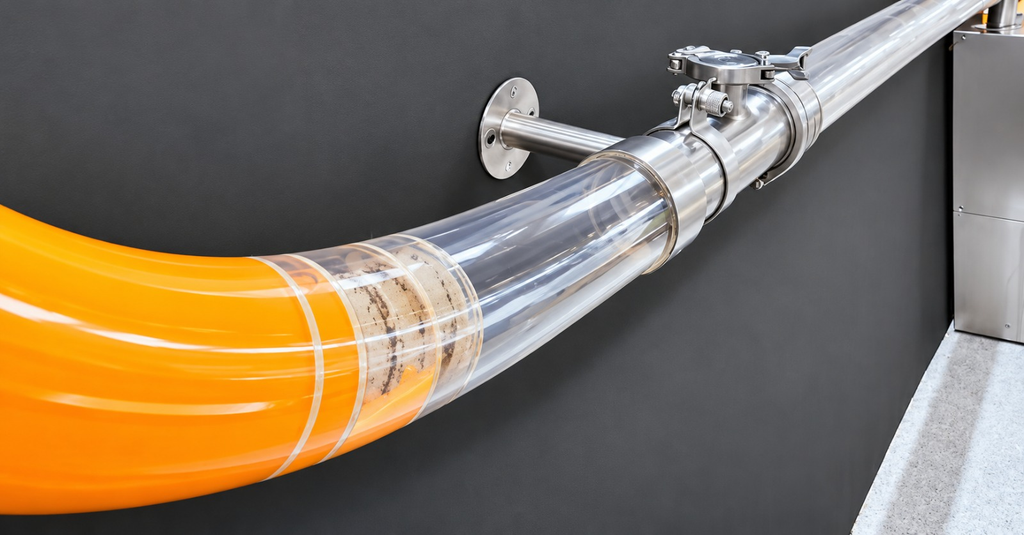
Pigging is a pipeline product recovery process that uses a specially designed device, known as a pig, to push residual product through a pipeline and recover it at the receiving point.
The pig travels through the pipeline, following the internal pipe surface and recovering the remaining product that would otherwise be lost during cleaning or flushing.
By incorporating pigging systems into production processes, manufacturers can:
1. Recover More Valuable Product
Pigging helps recover residual materials from pipelines, reducing product losses and improving overall material utilization. This is particularly beneficial when handling expensive, viscous, or high-value products.
2. Reduce Water and Cleaning Chemical Consumption
Recovering product before the cleaning cycle reduces the amount of material that needs to be flushed out. This can help lower water usage and reduce the consumption of cleaning agents, depending on the application.
3. Minimize Wastewater Generation
When less residual product enters the cleaning process, manufacturers can reduce the organic or chemical load entering wastewater treatment systems. This supports more efficient waste management.
4. Improve Production Efficiency
Pigging helps shorten product changeover and pipeline cleaning operations. Faster changeovers allow manufacturers to optimize production schedules and make better use of available equipment.
5. Support Sustainable Manufacturing
By improving product recovery and reducing resource consumption, pigging contributes to more responsible manufacturing practices and supports businesses in achieving their sustainability objectives.
Industries Benefiting from Pigging Technology
Pigging systems offer valuable product recovery opportunities across several industrial sectors.
- Food and Beverage: Recovering sauces, chocolate, dairy products, syrups, and other food materials from processing pipelines.
- Chemical Industry: Recovering valuable chemicals, resins, and specialty liquids while reducing product cross-contamination.
- Paint and Coatings: Recovering paints, coatings, and high-viscosity materials from transfer lines.
- Cosmetics and Personal Care: Recovering creams, lotions, gels, shampoos, and other viscous formulations.
- Pharmaceutical Manufacturing: Supporting controlled product recovery and efficient pipeline cleaning in suitable applications.
Pigging: A Practical Step Towards Sustainable Production
Sustainability in manufacturing is not limited to adopting renewable energy or reducing packaging waste. It also involves identifying and eliminating inefficiencies throughout the production process.
Product recovery through pigging provides manufacturers with a practical way to reduce avoidable material losses, optimize cleaning operations, and improve resource efficiency.
The potential benefits depend on pipeline design, product characteristics, system configuration, and operating conditions. However, when properly designed and integrated, pigging systems can deliver measurable operational and environmental advantages.
How IUS Pigging Supports Efficient Product Recovery
IUS Pigging provides industrial pigging solutions designed to help manufacturers improve product recovery, reduce pipeline residue, and optimize production processes.
With applications across industries handling food, beverages, chemicals, paints, and personal care products, IUS Pigging focuses on helping businesses recover valuable materials while improving operational efficiency.
As industries continue to prioritize waste reduction and sustainable production, pigging technology is becoming an important consideration for manufacturers looking to make better use of their resources.
Looking to reduce product waste and improve pipeline efficiency? Explore the product recovery solutions from IUS Pigging and discover how an appropriately designed pigging system can support your manufacturing operations.